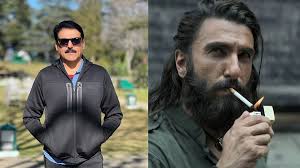
As Dhurandhar: The Revenge races toward ₹1,800 crore at the global box office, the debate it has ignited shows no signs of cooling down. Fans call it the most thrilling spy saga Indian cinema has ever produced. Critics call it the most brazen example of big-screen propaganda in recent memory. And somewhere between those two positions is the truth — which, if cinema history has taught us anything, is usually the most interesting place to look.
Now, actor Sanjay Mehandiratta — who plays Asif/Aquib Ali Zarwari in both Dhurandhar (2025) and Dhurandhar: The Revenge (2026) — has entered the conversation with a measured, disarming perspective that cuts through the noise from both sides: “Don’t treat the film like a history lesson.”
It is, in five words, one of the most honest things anyone associated with this franchise has said.
What Did Sanjay Mehandiratta Say About the Patriotism vs Jingoism Debate?
In an exclusive interview, Sanjay Mehandiratta addressed the ongoing controversy around Dhurandhar head-on — without defensiveness and without dismissiveness.
His core argument was that audiences approaching the film as a documentary or a historical record were setting themselves up to miss the point. “Don’t treat the film like a history lesson,” he said, urging viewers to engage with it as a work of dramatic fiction rooted in real events — not a literal reconstruction of them.
He acknowledged the fine line the franchise walks between patriotic storytelling and political messaging, but maintained that the film’s emotional power lies in its characters, not its ideology. For Mehandiratta, the conversation around jingoism risks overshadowing what is, at its core, a story about deeply human choices made in extraordinarily difficult circumstances.
His perspective is particularly interesting given the character he plays. Asif/Aquib Ali Zarwari is not an Indian hero — he is a figure from the Pakistani political-criminal ecosystem at the heart of Lyari. Playing such a character with nuance, in a film that critics have accused of collapsing its Pakistani characters into a single threatening mass, is a delicate act of craft that deserves its own examination.
Who Is Sanjay Mehandiratta and What Is His Role in Dhurandhar?
Sanjay Mehandiratta is a Delhi-based actor who has built a quiet but respected body of work in Hindi cinema and theatre over the years. Before Dhurandhar, he was known for his role in Junooniyat (2016) and Andaaz 2 (2025). His work in Dhurandhar as Asif Ali Zarwari — a character deeply embedded in Lyari’s criminal-political machinery — was among the more nuanced performances in a film built around broadly drawn power figures.
According to IMDb, he reprised the character in Dhurandhar: The Revenge as Aquib Ali Zarwari — suggesting the character arc evolves meaningfully across both parts.
In a franchise dominated by marquee names — Ranveer Singh, R. Madhavan, Sanjay Dutt, Arjun Rampal, Akshaye Khanna — Mehandiratta represents the kind of supporting actor who holds the film’s world together from the inside. His take on the patriotism debate therefore comes not from the star system’s protective bubble, but from someone who actually inhabits the grey zones of the film’s narrative.
What Exactly Is the Patriotism vs Jingoism Row Around Dhurandhar?
This is one of the most substantive film debates Indian cinema has had in years. Let’s lay it out clearly — because both sides have genuine points.
The case that it is patriotic storytelling:
Supporters argue that Dhurandhar and its sequel tell the story of a covert operative who sacrifices everything for his country — a story of personal courage, national service, and the human cost of intelligence work. They point to the emotional depth of Ranveer Singh’s performance, the moral ambiguity built into the Hamza character, and the film’s willingness to depict Indian intelligence failures alongside its victories. Taran Adarsh of Bollywood Hungama gave the sequel 4 out of 5 stars, calling its emotional core what distinguishes it from mere spectacle.
The case that it crosses into jingoism:
Critics point to a more uncomfortable list of observations. Writing for Newslaundry, Sowmya Rajendran found the sequel “angrier, louder, and more blatant in its messaging” and “emptier” than the first, noting that the first film at least worked across ideological lines due to strong storytelling. The Independent’s Shahana Yasmin wrote that the blend of history and mythmaking creates an immersive patriotic thriller for some — and for others, blurs the line between history and propaganda. IGN’s Siddhant Adlakha was more direct, characterising the film as being “in favor of naked political propaganda.” The Telegraph’s Agnivo Niyogi described the sequel as having “more gore, more violence and brazen propaganda” while “lacking the finesse that Dhurandhar at least could boast of.”
As Wikipedia’s entry on Dhurandhar: The Revenge summarises: the film received mixed reviews — with praise for performances, storytelling, and technical aspects, and criticism for its violence and alleged nationalist propaganda. Like its predecessor, it was banned in all Gulf Cooperation Council countries.
A review in The Rice Thresher described what it saw as the film’s hypermasculine jingoism, arguing the sequel treats the ruling party’s worldview as cinematic legitimisation and positions dissent as treachery. Meanwhile, Himal Southasian placed the franchise in the context of a broader trend in Hindi cinema under the current political establishment — arguing it represents a “culmination of a decades-long project” to cast Hindu nationalism as the definitive narrative of Indian nationhood.
The Week’s Karthik Ravindranath put it most evenly: the film’s “powerful core is diluted by overt jingoism, unnecessary elements, and a tendency to dumb down its message,” but it “remains a largely engaging, albeit flawed, tribute to India’s heroes.”
Is There a Difference Between Patriotism and Jingoism in Cinema?
Yes — and it is a difference worth spelling out, because the two terms are often used interchangeably when they describe genuinely distinct things.
Patriotism in cinema celebrates love of country, its people, its values, and the sacrifices made to protect them — while acknowledging complexity and moral cost. Films like Rang De Basanti (2006), Lagaan (2001), and Sarfarosh (1999) are considered patriotic because their love of India coexists with critique, nuance, and human fallibility.
Jingoism in cinema is patriotism stripped of complexity. It positions the nation as inherently righteous, its enemies as inherently monstrous, and any internal dissent as equivalent to treason. It does not ask questions — it provides certainties. It does not show moral cost — it celebrates moral victory.
The debate around Dhurandhar sits precisely at the boundary between these two definitions. Director Aditya Dhar’s previous film Uri: The Surgical Strike (2019) was widely considered to have crossed into jingoism — with its now-iconic “How’s the josh?” line becoming both a rallying cry and a shorthand for a certain brand of chest-thumping cinema. Dhurandhar 1 was seen by many critics as a more sophisticated evolution — using genre craft to smuggle its messaging more elegantly. Dhurandhar 2 is where the debate broke open again, with a significant portion of critics arguing the elegance had been abandoned in favour of bluntness.
A Medium essay by Kalyani Nandakumar offered one of the more interesting takes: that the first Dhurandhar’s propaganda was “not clumsy” but “carefully curated” — precisely what made it seductive. The sequel, in that reading, makes the mistake of trusting its audience less.
How Has the Dhurandhar Franchise Incorporated Real Historical Events?
This is the specific dimension that makes the “history lesson” question so urgent — and why Sanjay Mehandiratta’s advice to not treat the film as one is both diplomatically smart and intellectually honest.
According to Wikipedia, the sequel’s storyline loosely incorporates multiple real-world geopolitical events, including:
- Operation Lyari — the 2013 crackdown on Lyari’s criminal gangs in Karachi
- The 2014 Indian General Election — and the political shift it represented
- The 2016 Indian Banknote Demonetisation — a highly contested policy decision
The film also incorporates actual footage of Prime Minister Narendra Modi and references his rhetoric as part of its narrative — a level of political specificity unusual even by the standards of nationalistic Bollywood cinema. The CBFC, which prevented other filmmakers from using even the title “Prime Minister” in their films, cleared this usage in Dhurandhar — a contrast that many observers found instructive about the institutional environment in which these creative decisions are made.
When a film blends real operations, real elections, real footage of sitting politicians, and real policy decisions into a dramatised spy thriller — the invitation to treat it as a history lesson becomes almost irresistible, even if the filmmakers explicitly intend it as fiction. This is precisely the tension that Mehandiratta’s statement addresses: the film creates that invitation and then asks you not to accept it.
What Does the Critical Consensus Actually Say About Dhurandhar: The Revenge?
The honest answer is: it depends on who you ask — and what you are watching for.
If you are watching for performances, almost every critic agrees. Ranveer Singh’s portrayal of Hamza Ali Mazari has been universally praised as a career-defining turn. His restraint, emotional depth, and physical commitment to the role have drawn comparisons to the best of Indian action cinema. Rishabh Suri of Hindustan Times gave the film 4 out of 5, describing it as a “roller-coaster thriller” elevated by Singh’s powerful performance.
If you are watching for storytelling, the consensus is more mixed. The first film’s cohesion gave way in the sequel to what some critics described as loosely stitched plot threads held together by spectacle. Bollywood Hungama rated it 3 out of 5, calling it a capable entertainer despite a weaker second half.
If you are watching for political messaging — and increasingly, audiences are watching for exactly that — the film demands a more complicated response. The kind of complicated response that Sanjay Mehandiratta is gently steering people away from with five words: “Don’t treat the film like a history lesson.”
Why Does This Debate Keep Happening With Indian Spy Films?
Because Indian spy cinema, from Ek Tha Tiger (2012) to Raazi (2018) to URI (2019) to The Family Man (OTT, 2019–2021) to Dhurandhar (2025), exists in a unique cultural space where national security, political messaging, and entertainment constantly overlap.
The intelligence operative is a convenient narrative device. They operate outside normal legal and moral frameworks, in service of a cause that the audience is pre-disposed to root for. They make morally questionable decisions that are easily justified by the national stakes involved. They are, structurally, the perfect vehicle for any political messaging their creators choose to embed — because disagreeing with their choices requires disagreeing with the nation’s safety, which is emotionally very difficult for most audiences.
This is why the patriotism vs jingoism debate will continue for as long as Indian spy films are made. And this is precisely why actor voices like Sanjay Mehandiratta’s matter in this conversation — not to deflect criticism, but to remind audiences of the most honest way to engage with the film as cinema, rather than as manifesto.
What Is the Box Office Reality That Sits Alongside This Debate?
Whatever the critical conversation decides, the audience has voted — in historic numbers.
Per Wikipedia, Dhurandhar: The Revenge has crossed ₹1,800 crore worldwide, making it the second-highest-grossing Indian film of all time, the highest-grossing Hindi-language film both domestically and worldwide, and the ninth-highest-grossing film globally in 2026. It crossed ₹1,000 crore worldwide in its first week alone — a first for any Indian film.
These are not the numbers of a film preaching to a choir. These are the numbers of a film that found — and held — a mass audience across India and the global diaspora. That alone makes the ideological debate more urgent, not less. Films that only a niche audience watches can be safely argued about in academic circles. Films that 50 million people watch in theatres shape how those people think about their country, their neighbours, and themselves.
That is why Sanjay Mehandiratta’s intervention matters. Not because the debate should end. But because a participant from within the film — someone who inhabited one of its most morally complex roles — is asking audiences to hold both things at once: the entertainment value and the critical examination. Not one at the expense of the other.
Sources: IANS / Mid-Day Exclusive – Sanjay Mehandiratta Interview · Wikipedia – Dhurandhar: The Revenge · IMDb – Sanjay Mehandiratta · IMDb – Dhurandhar: The Revenge Full Cast · Bollywood Hungama – Review & Box Office · The Rice Thresher – Propaganda Review · Himal Southasian – Hindu Nationalism Analysis · Medium – Kalyani Nandakumar Dhurandhar Essay · Letterboxd – Audience Reviews · IndianScreen – Dhurandhar Critical Summary · Bollywood Hungama – Riteish Deshmukh on Dhurandhar’s Cinema Shift