Thirty-eight years. Over 100 films. Billions in box office revenue. And not a single script read from start to finish.
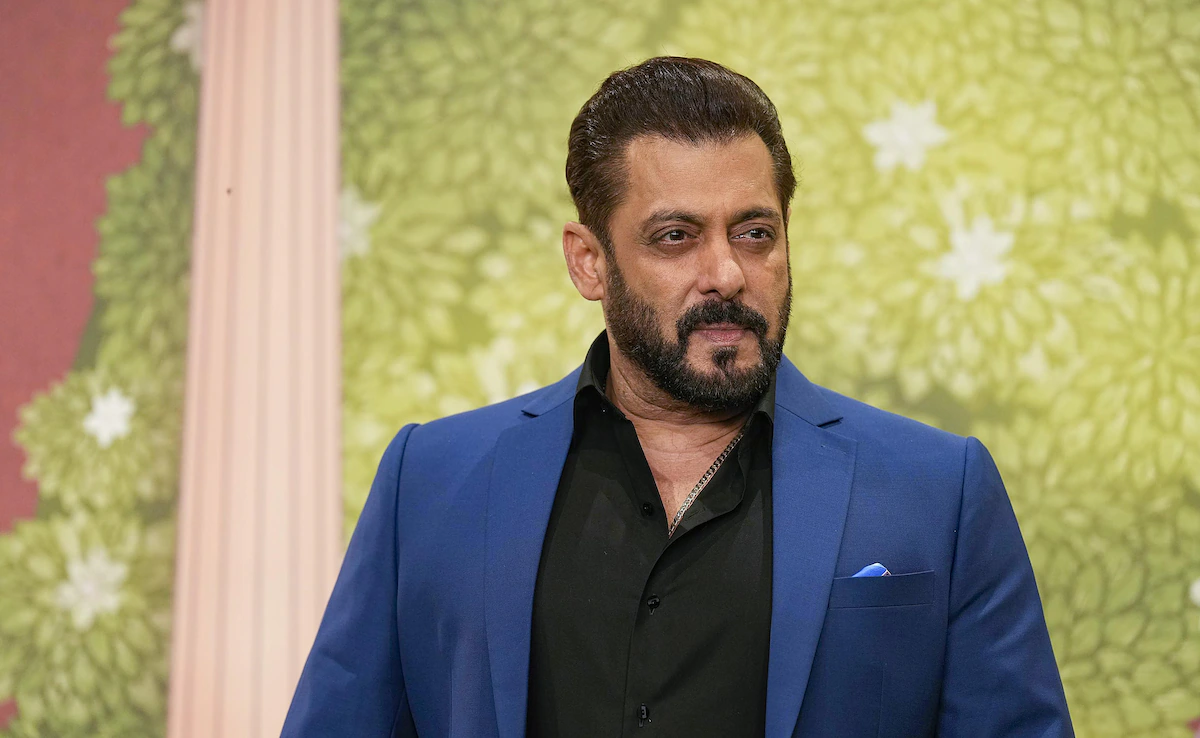
That is the revelation Salman Khan just casually dropped into a Variety India interview — and true to form, he did not say it to shock anyone. He said it the way you say the sky is blue. Like it was the most obvious thing in the world. Like he genuinely could not understand why anyone would be surprised.
“I have never read a script in my entire life. I’ve written them, but I’ve never read them,” he said.
Sit with that for a second. The man whose films have collectively grossed thousands of crores. The man who has been in the top tier of Bollywood’s box office for four consecutive decades. That man has never — not once — read a film script.
And somehow, improbably, gloriously — it has worked.
What Did Salman Khan Say Exactly? The Full Quote in Context
The revelation came during a wide-ranging interview with Variety India — a conversation that was published as a promo clip on May 16, 2026, and immediately sent social media into a collective double-take.
According to NDTV, the promo of the chat showed Salman Khan surprising fans with his candid revelations about his filmmaking process. His exact words:
“I have never read a script in my entire life. I’ve written them, but I’ve never read them.”
This is not Salman being provocative for the sake of content. He has said variations of this before — that he prefers to understand a film’s feel and commercial potential rather than reading a complete script, and that he skips detailed script readings to avoid overthinking.
But this version — stripped down to its barest, most direct form — has a clarity and confidence that earlier iterations lacked. He is not hedging. He is not explaining. He is simply stating a fact about how he has navigated one of the most successful careers in Indian cinema history.
He does not read scripts. He writes them.
Wait — Salman Khan Writes Scripts? What Does That Actually Mean?
This is the part of the quote that deserves its own unpacking — because it is not simply a boast.
Salman Khan is the son of Salim Khan — one half of the legendary Salim-Javed screenwriting duo that gave Indian cinema Sholay (1975), Deewar (1975), Zanjeer (1973), Don (1978), and Trishul (1978). Salim Khan is, without exaggeration, one of the most important screenwriters in the history of Hindi cinema. He shaped an entire era of Indian storytelling.
Writing is in Salman Khan’s blood — literally.
And the record bears it out. Salman has been credited as a writer on multiple projects across his career. His 1990 film Baaghi: A Rebel for Love — his second leading role, shot immediately after Maine Pyar Kiya — lists him as a writer. He has contributed to the script and story development of several of his productions under SKF (Salman Khan Films), the banner he launched in 2014.
What he appears to mean by “I’ve written them, but never read them” is something more intuitive than formal: he builds films from ideas, feelings, and instincts — writing in the sense of shaping and contributing — rather than sitting down as a passive reader consuming someone else’s creative vision from a printed page.
For a man who has described himself as someone who “makes movies like a fan” — who chooses films entirely based on gut reaction to the first narration rather than careful script analysis — this makes complete, consistent sense.
How Has Salman Khan Actually Been Choosing His Films All These Years?
Here is where the story becomes genuinely fascinating — because if he never reads scripts, how exactly does he decide what to do?
In earlier interviews, Salman has described his process with disarming simplicity. As he told Pinkvilla during the Tiger 3 (2023) promotions: “I have to like it in the first narration. If I like it in the first narration, then — ‘Shift these two films ahead, bring this film first.'”
First narration. That is it. A filmmaker sits across from Salman Khan, tells him the story orally, and within that single sitting Salman either feels it or he does not. No second reading. No notes session. No revision cycles. Just the first impression of the story as it is told to him — which is, in many ways, the closest thing to how an audience experiences a film: in real time, without preparation, responding purely to the feeling of being told a story.
There is a strange logic to this. The best films are not read — they are felt. If you cannot feel it in a narration, no amount of script polish will save it. Salman has essentially been applying the most fundamental test of cinematic storytelling to every project he has chosen for nearly four decades: Does it grab me in real time, the first time?
His box office record — which includes Maine Pyar Kiya (1989), Hum Aapke Hain Koun..! (1994), Bajrangi Bhaijaan (2015), Sultan (2016), Tiger Zinda Hai (2017), Dabangg (2010), Tiger 3 (2023), and a cameo in the historic Raja Shivaji (2026) — suggests the method, however unconventional, has worked spectacularly.
What Else Did Salman Khan Reveal in the Variety India Interview?
The script revelation was the headline — but it was not the only candid moment in the interview. Salman also addressed one of the most talked-about aspects of his public image: his extraordinary luxury watch collection.
The actor is frequently photographed wearing timepieces reportedly valued at over ₹1 crore each — a detail that never fails to generate content across entertainment and lifestyle platforms. His response to the inevitable question about it was vintage Salman: deadpan, slightly mischievous, and entirely immune to pretension.
“You see me wearing watches, but that doesn’t mean the watches are mine. It is this friend’s and that friend’s watch,” he said.
Whether this is literally true — whether Salman Khan is genuinely borrowing watches from friends for public appearances — or whether it is the kind of deflective humour that has always been his most reliable shield from intrusive questions, is anyone’s guess. But the quote has since generated its own wave of social media commentary, with fans speculating about exactly which friends are lending the Sikandar star ₹1-crore timepieces for day trips.
Who Is Salman Khan? A Career in Numbers
For the record — because a man who never reads scripts deserves to have his résumé written out properly.
Born: Abdul Rashid Salim Salman Khan, December 27, 1965, in Mumbai Film debut: Biwi Ho To Aisi (1988) — supporting role Breakthrough: Maine Pyar Kiya (1989) — won Filmfare Award for Best Male Debut Awards: 2 National Film Awards (as producer), 2 Filmfare Awards (as actor) Production banner: SKF (Salman Khan Films), launched 2014 Television: Multiple seasons of Bigg Boss host; 10 Ka Dum (2008) host Forbes: Listed among the world’s highest-paid celebrities in 2015 and 2018, per Forbes Father: Salim Khan — legendary screenwriter (Sholay, Deewar, Zanjeer)
As confirmed by Wikipedia, in a career spanning over three decades, Salman has been cited in the media as one of the most popular and commercially successful actors in Indian cinema. His fan following — the Bhai phenomenon — is unlike anything else in contemporary Bollywood: multi-generational, fiercely loyal, and operating on a frequency of devotion that no marketing campaign has ever fully been able to explain.
What Does the “I Never Read Scripts” Revelation Tell Us About Salman Khan?
Everything. And nothing new.
Because if you have been paying attention to Salman Khan for any length of time — watching his interviews, listening to how he talks about his work, observing the patterns in what he chooses and what he does not — this revelation is not a surprise. It is a confirmation.
Salman Khan has always operated from instinct. He has never been a method actor who disappears into roles for months. He has never been the kind of actor who speaks at length about character backstory or emotional preparation. What he brings to every film is an enormous, irreducible presence — the feeling that when he is on screen, something is happening. You feel it before you understand it. And that feeling, as it turns out, is also how he chooses his films.
He goes with the first feeling. He trusts the gut. He does not overthink it.
There is something worth sitting with in the contrast between Salman Khan and the conventional wisdom about how serious, successful actors approach their craft. The conventional wisdom says: read every version of the script, prepare deeply, make considered choices. Salman Khan has spent 38 years building one of the most improbable and enduring careers in Indian cinema by doing the opposite.
And if you are the kind of person who believes that overthinking kills more creative impulses than it refines — which a fair number of artists, writers, and filmmakers quietly believe — then “I have never read a script in my entire life. I’ve written them, but I’ve never read them” is not a confession.
It is a philosophy.
What Is Salman Khan Working on Next?
The Variety India interview comes at a busy moment in Salman’s career. Following his celebrated cameo as Jiva Mahala in Raja Shivaji (May 1, 2026) — which became one of the most talked-about moments of the film’s theatrical run — he has two major projects in the pipeline.
Maatrubhumi: May War Rest in Peace — A war drama directed by Apoorva Lakhia, starring Salman opposite Chitrangda Singh. Set at over 15,000 feet above sea level in some of India’s harshest terrain, the film is scheduled for August 15, 2026 (Independence Day), per Bollywood Hungama. The film has faced some regulatory uncertainty around its CBFC certification, though Salman has publicly dismissed the possibility of a direct-to-OTT release, insisting it will have a full theatrical run.
SVC63 — Salman’s next big-scale project, directed by Telugu filmmaker Vamshi Paidipally (Maharshi, Yatra) and produced by Dil Raju. Nayanthara has been confirmed opposite Salman. Shooting began on April 18, 2026, in Mumbai, as confirmed by Variety India itself. Salman has confirmed it will release on Eid 2027, per NewsBytesApp.
Two films. Two massive scale bets. Both chosen, presumably, from first narrations alone — without a single page of script being read.
Did Salman Khan’s Father Salim Khan Ever Write a Script for Him?
This question has its own rich, layered history — and the answer illuminates the father-son dynamic in ways that are both funny and deeply human.
Salim Khan — who co-wrote some of the most iconic screenplays in Indian film history as part of the Salim-Javed duo alongside Javed Akhtar — has been remarkably candid about why he has largely stayed away from writing films for his own son.
In an interview widely covered by India.com, Salim explained: “Aur fir agar Salman Khan ke saath banata rahu toh ek bohot badi risk hai. Hit ho gayi toh unki hai, flop ho gayi toh daddy ki thi.” (And if I keep making films with Salman Khan, it comes with a big risk. If it becomes a hit, it’s his film; if it becomes a flop, it was Daddy’s.)
A legendary screenwriter who helped shape an entire era of Hindi cinema — choosing not to write for his superstar son because of what it would mean professionally if the film failed. There is both humour and poignancy in that calculation. And perhaps a certain wisdom too: Salim Khan understood, better than most, that the son needed to find his own creative footing.
He found it. Without reading a single script.
Why This Quote Will Live Rent-Free in Bollywood’s Head For Years
Because it is the kind of statement that sounds outrageous until you think about it — and then starts to sound like the most sensible thing anyone in the industry has said.
Indian cinema is obsessed with scripts right now. Every prestige production announces its writer before its cast. Every awards season has a Best Screenplay category that is finally being taken as seriously as Best Actor. The craft of screenwriting — long overlooked in the commercial mainstream — is finally getting its due recognition.
And right in the middle of all that, Salman Khan says: I have never read one. Not once. In 38 years.
He is not dismissing scripts. He is not saying writing does not matter — he writes, after all. What he is saying is something about how he personally engages with cinema: at the level of instinct, feeling, and presence — not at the level of page analysis and craft deconstruction.
Most superstars would never admit this. They would give answers about research and preparation and character arcs. Salman Khan said the true thing, casually, to Variety India, on a Thursday afternoon, and then moved on to talking about his friends’ watches.
That is, in its own way, a kind of genius.
Sources: NDTV – Primary Report · Variety India – Original Interview · Pinkvilla – “I make movies like a fan” · Bollywood Hungama – Maatrubhumi · NewsBytesApp – SVC63 Eid 2027 · India.com – Salim Khan Never Wrote for Salman · Wikipedia – Salman Khan · Forbes – Highest-Paid Celebrities